

Seven years ago, two founders looked at Latin America's financial system and saw the same thing everyone else saw: a fragmented, siloed, deeply unequal landscape where data lived trapped inside institutions, credit was rationed by proxies instead of reality, and payments failed one in four times. The difference is they decided to do something about it.
Today, Belvo turns seven. And the view from here looks very different.
We bet day 0 on something most people called crazy for it to happen in Latin America
When we started in 2019, Open Finance in Latin America was mostly a concept borrowed from Europe, promising in theory, uncertain in practice, and definitely "too early" or “too crazy” according to most of the market. We disagreed. We believed that if you built the right infrastructure, the rails and the connectivity before the wave arrived, you'd be ready to ride it when it did.
Brazil proved us right faster than almost anyone expected. We joined as a regulated participant from Open Finance Brazil's earliest phases, scaling alongside the ecosystem as it grew from institutional data sharing to full account portability, and watching Pix go from a Central Bank project to the country's dominant payment rail in just a few years. Today, Brazil holds the #1 spot in global Open Finance adoption, with over 800 regulated institutions and 168 million active consents in the ecosystem. Belvo sits at the center of that ecosystem as the #1 non-bank provider of active account connections (and #3 overall, ahead of most of the major banks).
Mexico has followed its own path with less regulatory mandate, more market-driven adoption and that's where the real-world proof of value has been clearest. Open Finance in Mexico isn't a compliance checkbox. It's already reshaping how companies understand customers, move money, manage risk, and build more resilient business models. From Inter using Open Finance and employment data to dynamically adjust credit lines, to Citibanamex cutting income verification from days to seconds, to Smart Fit growing monthly successful transactions by 200% through direct debit. The outcomes speak for themselves.
Across both markets, Belvo now powers more than 80 million connected accounts and processes over US$1 billion in annualized total payment volume. Over 150 financial innovators across Brazil and Mexico trust our platform to run their most critical workflows.
The problem we set out to solve hasn't gone away, we've just gotten better at solving it
Latin America's financial data still lives in silos and payments are still complex. But the walls are thinner now, and Belvo has spent seven years building the tunnels through them.
The problem was never purely technical. It was economic. Some 30% of unsecured consumer credit in Brazil goes bad. In Mexico, between 20% and 30% of credit applications are rejected simply because the applicant lacks a formal credit bureau history, not because they can't pay, but because the system can't see them. Payment failure rates on recurring card charges hover above 25%. These aren't edge cases. They're the baseline.
The answer was always better data, and better ways to move money. Belvo's platform today connects to official employment records, fiscal authorities, and bank accounts across Brazil and Mexico, giving lenders, fintechs, banks and financial innovators access to income verification, employment history, payment behavior, and transaction patterns that traditional models simply can't see. But data alone is never enough.
That's why we built the payment rails to act on it, from Pix-powered collections in Brazil to direct debit in Mexico, turning insights into transactions and transactions into outcomes. The results compound: Macropay increased its collection rate by 60% using employment data. Alvos grew monthly loan recovery by 600% with direct debit. R2 cut loan repayment chargebacks by 55%.
These aren't pilots. They're production systems running at scale, every day.
This year, we changed what Belvo looks like
Year seven brought something we'd been building toward for a long time: a new brand and a new platform that reflects what Belvo has actually become.
The new Belvo, introduced in early 2026, is not just a data API with a new coat of paint. It's the intelligence layer that Open Finance was always missing. The platform now combines connectivity, enrichment, payments, and AI into a single surface that helps enterprise teams move faster and drive measurable ROI from their financial data and payments workflows.
Three capabilities define the new platform:
Bela, the AI financial agent. For the first time, data teams and business analysts can talk to data obtained through Belvo in natural language. Ask a question about institutional failure rates, transaction volume trends, or user cohort behavior and get charts, KPIs, and tables back instantly, without writing a line of SQL. Bela is built with role-based access controls and automatic query guardrails, so exploration is fast without being risky.
Customizable AI models via custom endpoints. The fastest way to deploy sophisticated financial intelligence isn't building your own data infrastructure from scratch, it's wiring programmable logic directly into infrastructure that already exists. Belvo's custom endpoints let clients encode their own business logic and risk models, turning raw Open Finance data into tailored AI-powered decisions in record time.
AI Collections. Collections is one of the highest-friction, highest-cost workflows in financial services, and one of the most amenable to automation. But what makes Belvo's approach different is what sits underneath it. Because our AI collections agent, Roberta, runs on top of real Open Finance data, she understands each debtor's financial reality better than any generic collections tool ever could. She knows when there's money in the account, how income flows month to month, and what competing obligations look like. That context is what makes the personalization feel less like automation and more like a conversation. She reaches debtors via WhatsApp and voice, contacts them at exactly the right moment, and negotiates partial payment plans that fit their actual situation, 24/7, without a human team on the other end. Collections powered by the most complete financial picture available. Clients recover more, faster, with a fraction of the operational cost.
What's next: platforms, not point solutions
If the first seven years were about building the connectivity layer, the next chapter is about building the intelligence layer on top of it.
The Three forces are shaping what comes next.
- The shift from integration to orchestration.
Companies no longer want to spend months stitching together different point solutions with internal engineering. There is a clear move toward unified platforms that support the entire financial lifecycle, from onboarding and underwriting to payments and automated collections. Belvo is evolving beyond connectivity to enabling the entire workflow, with AI woven into every touchpoint. - The shift from access to action.
Seven years ago, the hard question was "Can we get the data?" Belvo solved that. The question now is "Can we turn that data into action automatically and instantly?" The answer is yes, and that is exactly what we are building toward. We are moving from a world of static information to one of autonomous financial decisions. - Scaling across two distinct but complementary markets.
Brazil's regulated, data-rich environment, with its mandatory Open Finance framework, Pix rails, and the upcoming Pix Automático, is the perfect testbed for the next generation of financial products. Mexico's market-driven adoption means that what works there works because customers choose it. Both are places where Belvo is deeply embedded, with the infrastructure, the relationships, and the track record to move fast.
The platform we're building isn't just for the companies that are already digital-native. It's for every institution that wants to compete in a world where financial intelligence is a product differentiator, not a back-office function, and that wants to offer personalized and automated financial products.
To everyone who built this with us
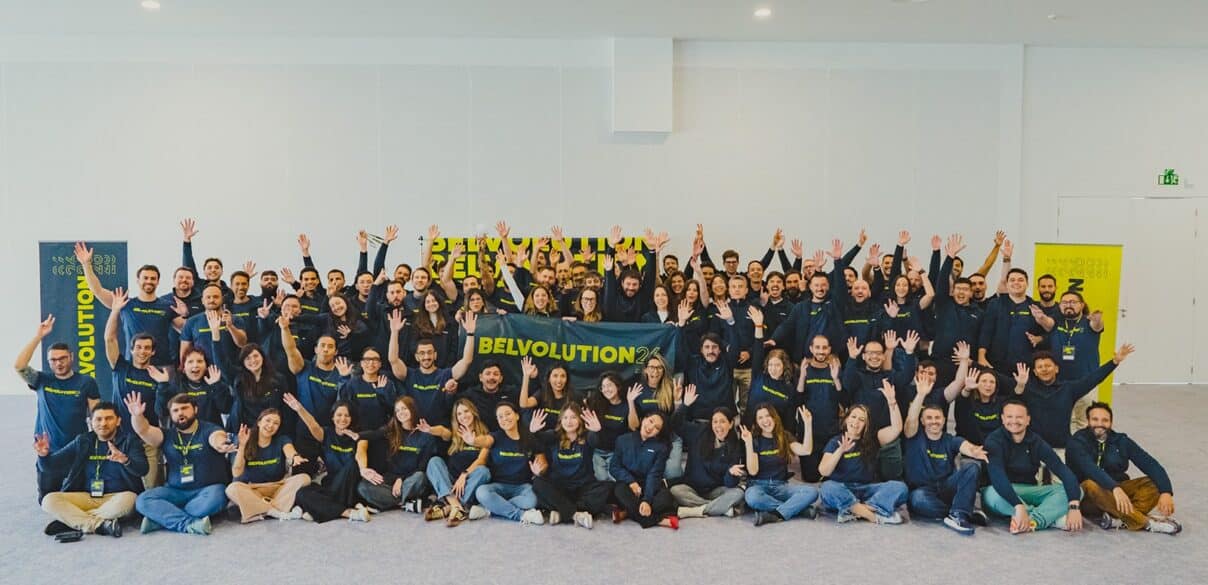
Seven years is a long time to stay obsessed with a problem. It takes a particular kind of team: one that moves fast but thinks carefully, that celebrates wins but stays hungry, that operates across São Paulo, Mexico City, Barcelona, without losing focus and sights on the mission of democratizing access to financial services in Latin America.
To our team: none of this happens without your talent, curiosity and persistence. To our clients and partners: your trust is the only reason any of this matters. To our investors: your conviction in a thesis that was "too early" turned out to be exactly right.
The best of what Belvo will build hasn't been built yet.
Here's to year eight.